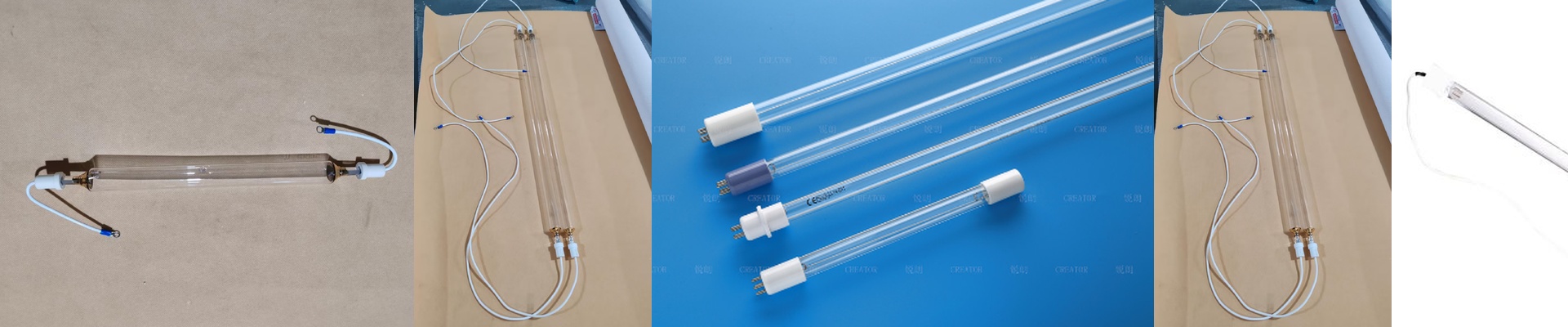
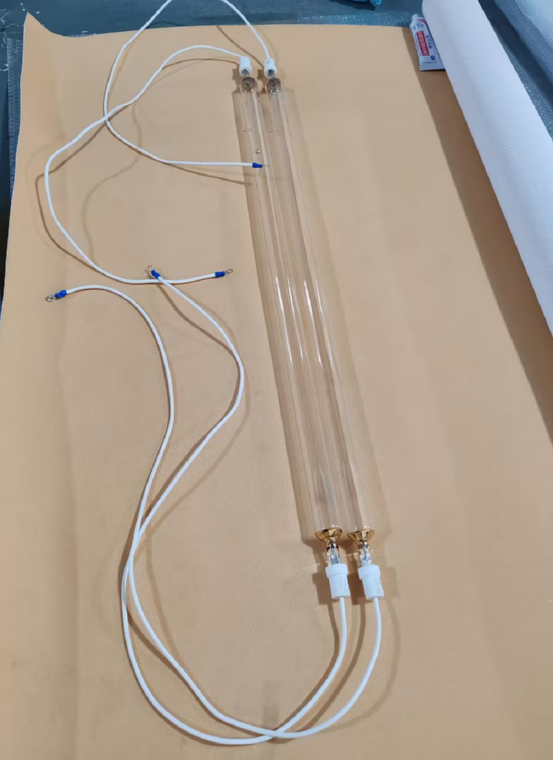
Walk the plant floor of a municipal water treatment facility and you’ll hear the steady hum of the UV reactor. Water is moving fast—liters per minute—carrying a microbial load that fouls membranes, drives biofouling, and pushes systems out of compliance. Thermal disinfection can’t keep up with that flow, and chemical dosing leaves residuals you don’t want downstream. The only practical way to stop the microbes in their tracks is a precise burst of photon energy. At the heart of the reactor sits the quartz UVC lamp tube. In flowing water, you only have a fraction of a second to deliver enough germicidal photons to inactivate bacteria. Either the dose is sufficient and the system passes microbiological testing, or it isn’t—and you’re staring downtime, remediation, and regulatory risk in the face.
What matters, technically
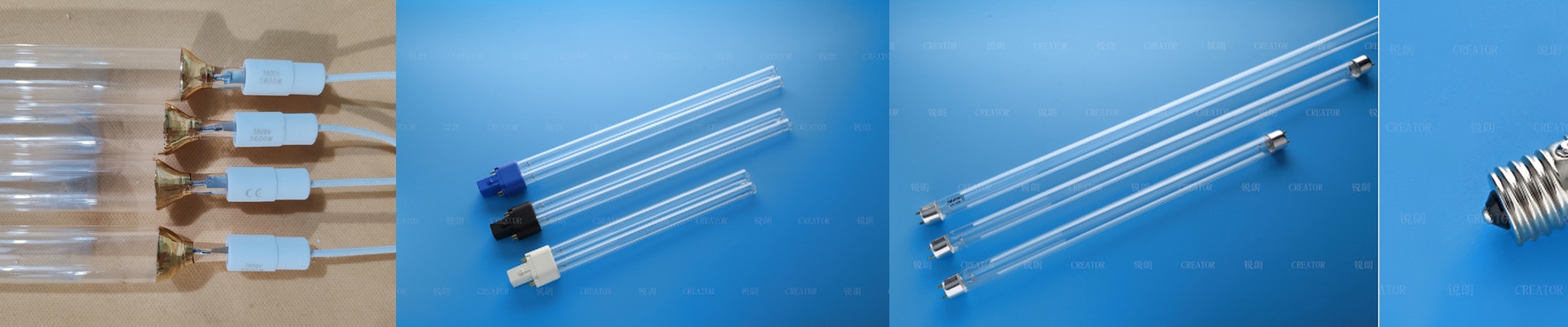
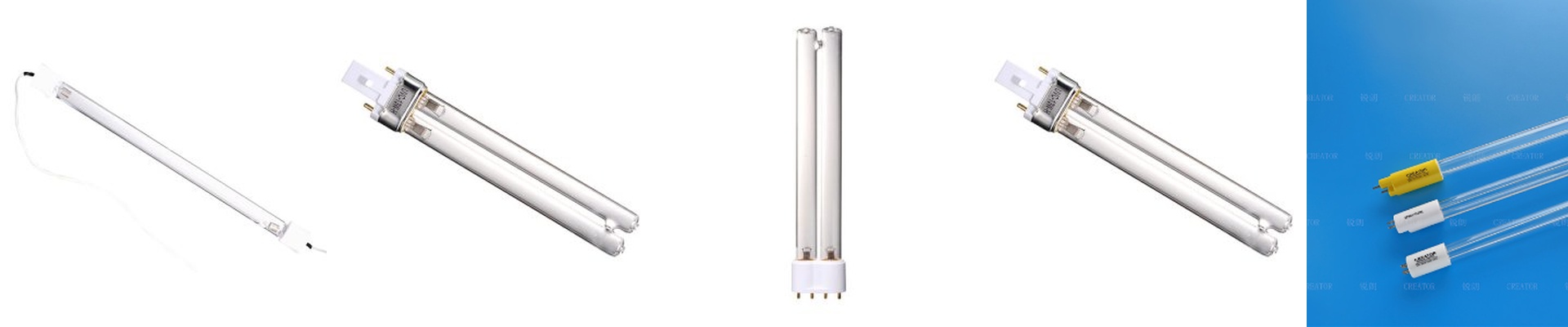
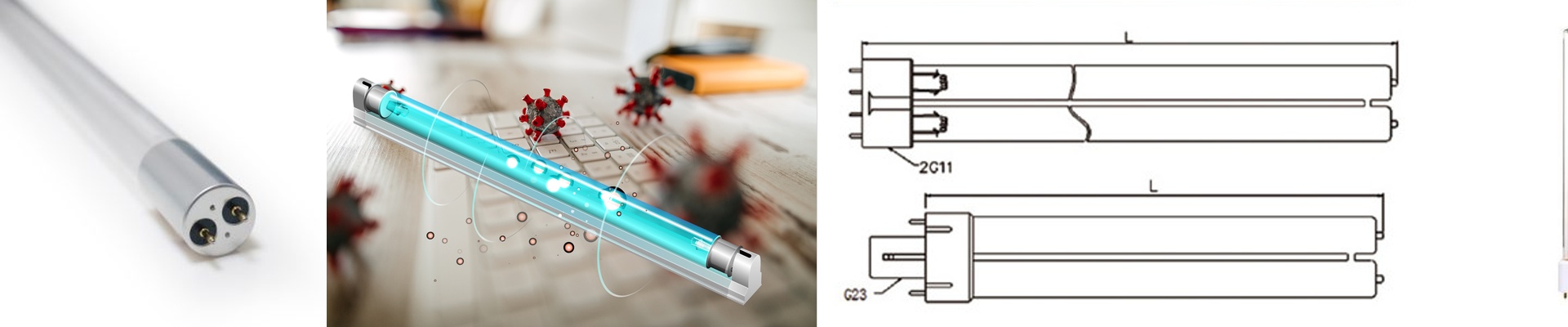
A quartz UVC lamp tube isn’t just a light source. It’s a photon engine, tuned for 254 nm output and high photon flux in a wet, dynamic environment.
- **Spectral output and germicidal action:**Bacteria go down when nucleic acids absorb UV, peaking near 260 nm. Mercury vapor emission at 254 nm lines up closely, giving you high quantum efficiency for DNA damage. The quartz envelope matters here: it keeps transmission high at 254 nm and supports the internal mercury vapor discharge without quenching output.
- **Peak irradiance and dose calculation:**In flowing water, dose is irradiance times exposure time. Flow velocity and reactor geometry fix exposure time, so to hit second-level inactivation you have to raise irradiance. Quartz UVC tubes, built for high current density and stable arc confinement, deliver the peak irradiance needed right at the water boundary layer. Dose targets for common microbes are typically in the tens of mJ/cm². With high-output quartz tubes, you can reach those doses inside the available contact time.
- **Photon density and lamp geometry:**The fluence at the target plane depends on lamp output and how well it’s coupled into the water. A quartz tube gives you the right balance of arc length and diameter to match the reactor sleeve and maximize the illuminated volume. Short-arc designs concentrate output; long-arc spreads it. In flow-through disinfection, you pick arc length and placement so the entire cross-section gets the required fluence distribution.
- **Quartz quality and envelope integrity:**High-purity fused quartz resists solarization under intense UVC and keeps transmission stable over thousands of hours. It also handles thermal cycling and mechanical stress from mounting and water pressure. The envelope needs to stay ozone-free at operating temperature—otherwise ozone forms and eats 254 nm photons, cutting effective dose.
- **Electrical and thermal behavior:**Starting voltage, operating current, and junction temperature dictate how fast the lamp hits stable output and how it holds under duty cycles. Quartz UVC tubes are designed to settle quickly, so warm-up delay is minimal. Match the ballast correctly and the arc stays stable—no flicker that introduces dose variability.
- **End-of-life behavior:**Output decline is predictable. Mercury inventory depletes, electrodes erode, and spectral output drops. A well-built quartz UVC tube gives you a gradual output curve, not a sudden cliff. Monitor lamp hours and output with sensors, and you can swap the tube before delivered dose drifts below the inactivation threshold.
Why this works in water treatment
In water treatment, the reactor deals with moving fluid, variable turbidity, and shifting microbial loads. The quartz UVC lamp tube delivers the photon throughput needed to handle those swings.
- **Second-level inactivation under flow:**Hydraulics set contact time. The lamp supplies the photon flux required to hit the target dose in that window. With high peak irradiance at 254 nm, the photon dose at the bacterial boundary layer hits the inactivation threshold in seconds—even at high flow rates.
- **Consistent dose despite variable water quality:**Turbidity scatters and absorbs UVC. To compensate, lamp output has to be high enough to ensure penetration. Quartz UVC tubes hold output stable, so the reactor can meet dose requirements across a range of water clarity. Pair that with a sleeve that resists fouling, and you get reliable inactivation performance.
- **Energy efficiency at the point of use:**UVC generation is direct—electrical energy turns into photons without heating the water. That eliminates the latent heat load and energy waste you see with thermal methods. Efficiency here is photons per watt, and in practice that means lower kWh per cubic meter of treated water.
- **Operational simplicity and uptime:**The lamp drops into existing reactor housings with standard mounting and electrical interfaces. It starts fast, runs continuously, and only asks for periodic inspection. No chemical handling, no residual to strip out, no heat exchanger to scale. The payoff is fewer unplanned stops and maintenance windows you can plan around.
- **Compact scalability:**Whether it’s a small point-of-use unit or a large municipal channel, the modular nature of quartz UVC tubes lets you scale photon output by adding or replacing lamps. The geometry fits standard sleeves and channels, so retrofits and expansions stay straightforward.
The details that keep it honest
Quartz UVC lamp tubes are tough, but real-world constraints still matter. Match the lamp to the system, and design for the environment.
- **Reactor hydraulics define the dose window:**Dose equals irradiance times time. If flow velocity climbs, exposure time drops. To keep inactivation constant, you either raise irradiance or add lamps. Design the reactor around the target flow range, then spec lamp output to cover the worst case.
- **Mounting and cooling affect output:**The lamp performs best within a defined orientation and temperature envelope. Mount it horizontally, vertically, or at an angle and you can change arc stability and thermal coupling. Water-cooled reactors help hold the optimal temperature; air-cooled systems need adequate airflow. Misalignment or poor thermal management leads to output drift and shortened life.
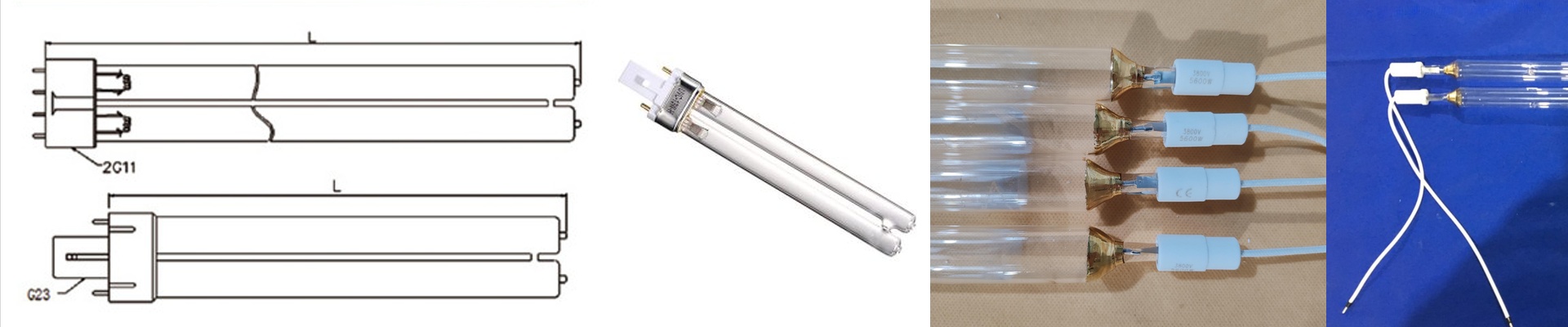
- **Electrical compatibility is non-negotiable:**Use the ballast specified for the lamp. Voltage and current have to match the operating point. Wrong ballasts give you unstable arcs, premature electrode wear, and reduced output. Verify connector types, pin configurations, and cable lengths during install.
- **Lamp sleeves and fouling:**The quartz sleeve that isolates the lamp from water has to stay clean. Mineral scaling and organic films attenuate 254 nm photons. Install wipers, automatic cleaning systems, or plan manual cleaning—transmission has to be maintained. Even a thin film can cut dose enough to miss inactivation targets.
- **End-of-life planning and sensor calibration:**Track operating hours and measure output where you can. UVC sensors drift, so calibrate them on a schedule. Replace lamps based on output targets, not just hours, and keep spares on hand for quick swaps.
- **One practical trade-off:**Quartz tubes deliver high output, but they’re sensitive to mechanical shock during installation. Handle them carefully, avoid torque on the envelope, and follow the mounting torque specs for end fittings. A cracked envelope ends service immediately—and the real cost is the downtime to replace it. If your job is to stop bacteria in flowing water within seconds, the quartz UVC lamp tube is the core of the solution. It gives you stable, high-flux 254 nm output, without chemicals and without thermal lag. Spec it to match your flow, geometry, and water quality, and the reactor will do the rest—second after second, liter after liter.